
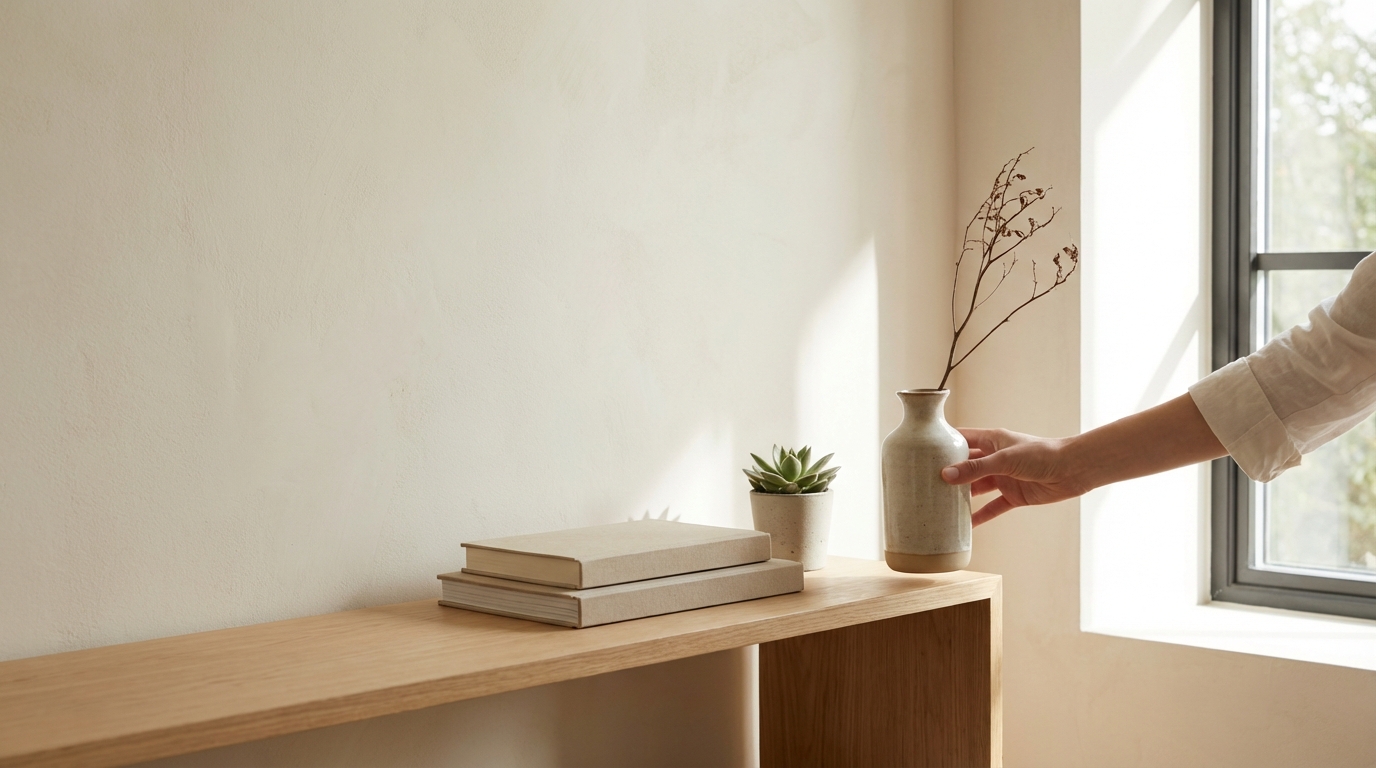
Minimal decor has become a popular topic in homes, offices, and shared spaces because many people notice how calm it feels. Rooms with fewer objects, simple colors, and clear surfaces often feel easier to be in, even without knowing why. This sense of calm is not just a trend or a personal preference. It connects to how the human brain processes visual information and responds to its surroundings.
Visual simplicity plays a strong role in shaping mood, focus, and emotional comfort indoors. When a space feels quiet to the eyes, the mind often follows. Understanding why minimal decor feels calmer helps explain why many people feel more relaxed in simple environments, even if they cannot easily describe the reason.
Visual Simplicity and How the Brain Responds
The human brain is constantly taking in information from the environment, especially visual information. Every object, color, and pattern requires a small amount of mental effort to process. When a room is filled with many decorative elements, the brain must work harder to sort and understand what it sees.
Minimal decor reduces the number of visual signals competing for attention. With fewer items in view, the brain can process the space more easily and with less effort. This reduced demand allows mental energy to be used for thinking, resting, or enjoying the environment rather than managing visual input.
The Brain’s Preference for Order
The brain naturally looks for patterns and order in the environment. When objects are arranged simply and predictably, the brain can quickly understand the space. This sense of order often creates a feeling of safety and control, which supports calm emotions.
Cluttered spaces, on the other hand, can feel unpredictable or chaotic. Even if the clutter is not dangerous, the brain may interpret it as something that needs attention. Minimal decor removes that constant background signal, making it easier to relax.
Reduced Cognitive Load in Simple Spaces
Cognitive load refers to the amount of mental effort being used at any given time. Visual clutter adds to this load by presenting too many things to think about at once. Each object can trigger thoughts, memories, or decisions, even without conscious awareness.
Minimal decor lowers cognitive load by limiting the number of visual cues present. When there is less to process, the brain can slow down. This is one reason minimal rooms often feel restful, even during busy or stressful days.
Fewer Visual Decisions
Every object in a room represents a small decision, such as whether to look at it, ignore it, or interact with it. In a visually busy space, these decisions add up throughout the day. Over time, this can contribute to mental fatigue.
Simple decor reduces the number of decisions the brain must make. With fewer distractions, attention can settle more easily. This can support clearer thinking and a greater sense of ease while indoors.
The Role of Color in Creating Calm
Color plays a powerful role in how a space feels. Minimal decor often uses a limited color palette, which helps create visual harmony. When colors work together rather than compete, the space feels more balanced and gentle.
Soft, neutral, or muted colors are commonly associated with calm environments. These colors reflect light evenly and do not demand strong emotional reactions. When used consistently, they help create a steady and soothing visual experience.
Color Consistency and Visual Flow
Using fewer colors allows the eye to move smoothly around a room. There are fewer sharp contrasts or sudden shifts that might interrupt attention. This smooth visual flow supports relaxation and reduces mental tension.
Consistency does not mean a space must feel dull or empty. Small variations in tone or texture can add interest without overwhelming the senses. Minimal decor often relies on these subtle differences to keep spaces engaging yet calm.
Light, Space, and Visual Breathing Room
Minimal decor often allows natural and artificial light to play a bigger role in a room. With fewer objects blocking light, spaces can feel brighter and more open. Light helps define shapes and surfaces without adding visual noise.
Open areas and clear surfaces provide what is sometimes called visual breathing room. This refers to areas where the eye can rest without focusing on details. These visual pauses are important for mental comfort and emotional balance.
Negative Space and Calm Perception
Negative space is the empty area around and between objects. In minimal decor, negative space is treated as an important design element rather than wasted space. It helps objects stand out without overwhelming the viewer.
This balance between objects and empty space allows the room to feel organized and intentional. The eye can move slowly and comfortably, which supports a calm and grounded feeling while spending time in the space.
Emotional Responses to Simple Environments
Emotions are closely tied to sensory experiences, including what is seen. Simple environments often feel emotionally lighter because they do not demand constant attention. This can reduce feelings of stress or irritation.
Minimal decor can also support feelings of clarity and peace. When surroundings are simple, emotional responses are less likely to be triggered by visual overload. This makes it easier to maintain a steady mood throughout the day.
Sense of Safety and Comfort
Calm spaces often feel safe because they are predictable and easy to understand. Minimal decor removes surprises that might otherwise cause discomfort or distraction. This sense of predictability can be comforting, especially during stressful times.
Comfort is not only physical but also emotional. A visually calm space can feel welcoming and supportive without needing many decorative elements. The simplicity itself becomes part of the comfort.
Order, Control, and Mental Ease
Minimal decor often reflects a clear sense of order. Items are placed with intention, and each object usually has a purpose or meaning. This visible order can influence how people feel about their ability to manage their environment.
Seeing an organized space can create a feeling of control, even if only subconsciously. When surroundings feel manageable, mental tension often decreases. This contributes to the calming effect associated with minimal decor.
Clarity Through Intentional Choices
Minimal decor encourages thoughtful decisions about what belongs in a space. This intentional approach can make rooms feel more personal and meaningful. Each item earns its place, which reduces visual noise.
Clarity in the environment can support clarity in thinking. When surroundings are not crowded with excess items, it becomes easier to focus on tasks or simply enjoy being present in the space.
Decision Fatigue and Daily Living
Decision fatigue happens when the brain becomes tired from making too many choices. Visual clutter can contribute to this by constantly presenting options and distractions. Even small choices can add up over time.
Minimal decor reduces the number of daily visual decisions. With fewer items demanding attention, the brain can conserve energy. This can make everyday activities feel less exhausting and more manageable.
Simplifying the Environment to Support Focus
Spaces with minimal decor often support better focus and concentration. Without constant visual interruptions, attention can stay on the task at hand. This is especially helpful in areas used for work or study.
Focus does not require complete emptiness, but it benefits from simplicity. Minimal decor creates an environment where the mind can settle without being pulled in many directions at once.
Minimal Decor and Mindful Living
Minimal decor often aligns with mindful living, which emphasizes awareness and intention. A simple space encourages noticing details that might otherwise be overlooked. Light, texture, and shape become more noticeable.
This awareness can support a calmer state of mind. When surroundings are simple, it becomes easier to stay present. The environment supports mindfulness rather than competing with it.
Creating Space for Attention
Attention is a limited resource, and minimal decor helps protect it. By reducing visual demands, the environment allows attention to be directed where it is most needed. This can support both productivity and relaxation.
Spaces designed with simplicity often feel more peaceful because they respect the limits of attention. This respect translates into a calmer experience for those who use the space.
Personal Expression Without Overcrowding
Minimal decor does not mean removing personality from a space. Instead, it focuses on expressing personality through fewer, more meaningful items. This approach can make personal objects feel more special.
When personal items are not lost among many decorations, they stand out more clearly. This clarity can strengthen emotional connections to the space without creating visual overload.
Meaningful Objects and Emotional Calm
Objects with personal meaning can bring comfort and joy when displayed thoughtfully. Minimal decor allows these items to be seen and appreciated. They are not competing for attention with many other objects.
This thoughtful display supports emotional calm by highlighting what truly matters. The space feels intentional rather than crowded, which contributes to a sense of peace.
Minimal Decor in Different Indoor Spaces
The calming effects of minimal decor can be experienced in many types of indoor spaces. Living rooms, bedrooms, kitchens, and work areas can all benefit from visual simplicity. Each space has different needs, but the core principles remain similar.
Applying minimal decor thoughtfully means considering how each room is used. Calm is supported when decor choices match the purpose of the space rather than overwhelm it.
Bedrooms and Restful Design
Bedrooms are often the first place where people notice the calming effects of minimal decor. Simple layouts, limited colors, and clear surfaces can support better rest. The absence of visual clutter helps signal the brain that it is time to relax.
Reducing unnecessary items in a bedroom can also reduce mental reminders of tasks or stress. This allows the space to serve its main purpose of rest and recovery.
Work Areas and Mental Clarity
In work areas, minimal decor can support concentration and efficiency. Fewer visual distractions make it easier to focus on tasks. Clear surfaces can also make it easier to stay organized.
A simple work environment can feel less stressful, even during demanding tasks. The calm visual background supports sustained attention and mental clarity.
Common Misunderstandings About Minimal Decor
Minimal decor is sometimes misunderstood as cold or empty. In reality, it focuses on balance rather than absence. A well-designed minimal space can feel warm, inviting, and comfortable.
Another misunderstanding is that minimal decor is difficult to maintain. While it does require thoughtful choices, it often makes cleaning and organizing easier. This practical benefit can also support a calmer daily experience.
Minimal Does Not Mean Deprived
Minimal decor does not require removing items that bring joy or comfort. It encourages choosing items carefully and displaying them with intention. This approach supports both emotional well-being and visual calm.
A space can be simple and still feel full of life. The key is reducing excess, not removing meaning.
Practical Principles That Support Calm Visual Design
Several core principles help explain why minimal decor feels calmer. These principles guide how objects, colors, and space are used together. Understanding them can clarify how visual simplicity supports emotional ease.
- Limiting the number of visible objects to reduce visual noise.
- Using a consistent and gentle color palette.
- Allowing empty space to balance decorative elements.
- Choosing items with clear purpose or meaning.
- Maintaining order through thoughtful placement.
These principles work together to create a calm visual experience. When applied thoughtfully, they reduce mental effort and support emotional balance. The result is a space that feels easier to be in, even during busy or challenging moments.